Jack Nicholson
 | |
|---|---|
| Full name | John Joseph Nicholson |
| Date of birth | April 22, 1937 |
| Place of birth | Neptune City, Monmouth County, New Jersey, USA |
| Nationality | United States of America |
| Occupation | Actor, film producer, screenwriter |
| Professional career periods | 1956—2010 |
| Family (Relationships) | Never officially married; long-term relationships with Sandra Knight, Anjelica Huston, Rebecca Broussard; five children |
| Friendship | Danny DeVito, Warren Beatty |
| Awards | 3 Academy Awards, 6 Golden Globe Awards, BAFTA, AFI Life Achievement Award, Kennedy Center Honors |
| IMDb ID | 0000197 |
| Wikiserial ID | 0000006 |
| Variants of genuine autographs
(click to enlarge) |
|
Jack Nicholson (full name John Joseph Nicholson) is an American actor, screenwriter, and film producer, one of the most influential figures in the history of world cinema. His professional career spans more than half a century and includes dozens of iconic roles that have had a significant impact on the development of acting in the United States and abroad.
Nicholson holds the record for the most Academy Award nominations among male actors and is one of the few performers to have won three Academy Awards for acting. His screen portrayals—from charismatic antiheroes to psychologically fractured characters—have become an integral part of the cultural legacy of cinema in the second half of the 20th century.
Nicholson's distinctive qualities include a combination of intellectual depth, irony, inner aggression, and emotional vulnerability. He developed a recognizable acting style, combining minimalist gestures with precise use of intonation, gaze, and pauses. This style has had a significant influence on several generations of actors and directors.
Biography
John Joseph Nicholson was born on April 22, 1937, in the small Atlantic coast town of Neptune City, New Jersey. His origins remained a family secret for many years: the woman he considered his mother, Ethel May Nicholson, was actually his grandmother. The actor's biological mother was June Frances Nicholson, who gave birth to her son out of wedlock and decided to raise him as a younger brother to avoid the social pressures typical of American society in the 1930s.
Nicholson only learned the truth about his origins in the mid-1970s, when his career was already at its peak. This discovery was a serious psychological shock, but the actor himself later noted that he didn't perceive it as a tragedy, viewing it rather as a difficult, yet shaping, part of his life.
Nicholson's childhood was relatively peaceful. He was raised Catholic and attended a church school, where he received a basic education and instilled discipline. From an early age, he showed an interest in reading, music, and cinema, actively attending movie theaters and enjoying classic Hollywood films.
While attending Manasquan High School, Nicholson participated in school theater productions and demonstrated an unconventional way of thinking. Teachers noted his independent spirit, analytical nature, and ability to express his own point of view, which later became one of the key traits of his acting personality.
Early Steps in Film
After graduating from high school, Nicholson moved to Los Angeles, where he initially had no clear goal of becoming an actor. His first serious job was at Metro-Goldwyn-Mayer, where he worked as a runner and assistant, performing support tasks. This experience allowed him to gain an inside look at the Hollywood studio system, understanding the principles of casting, production, and film promotion.
At the same time, Nicholson began attending acting classes and developed an interest in screenwriting. He consciously viewed acting not as a path to quick fame, but as a craft requiring long-term, systematic development.
His film debut took place in the late 1950s in low-budget films, primarily exploitation films. These projects were not widely released, but they provided an important practical training, allowing Nicholson to gain experience in front of the camera and learn to adapt to the varied conditions of the filmmaking process.
Early film roles and the formation of an actor's personality
The late 1950s and early 1960s were a time of professional development for Jack Nicholson, as he developed his own on-screen style and gained experience. Unlike many of his contemporaries, he did not experience a meteoric rise in his career and remained largely unnoticed for a long time, working in low-budget projects that rarely attracted wide audiences.
A key role in his early career was played by his collaboration with producer and director Roger Corman, one of the most significant figures in American independent film at the time. Corman offered young actors and screenwriters the opportunity to work without strict studio restrictions, which fostered creative freedom and an experimental approach.
Nicholson appeared in a number of Corman films, including The Little Shop of Horrors (1960), in which he played a minor but memorable role. These works did not make him famous, but they allowed him to develop a strong screen presence and self-confidence. It is important to note that during this period, Nicholson did not limit himself exclusively to acting.
Screenwriting
In the 1960s, Nicholson established himself as a screenwriter, which became an important part of his professional identity. He contributed to the screenplays for the films "Thug" and "The Trip" (1967), the latter of which was inspired by psychedelic culture and the American counterculture movement. Working on these screenplays allowed him to gain a deeper understanding of dramatic structure, character motivations, and narrative mechanisms.
This experience had a direct impact on his acting. Nicholson began to approach roles not only as a performer but also as a textual analyst, paying particular attention to the character's internal logic, hidden conflicts, and subtext. He repeatedly emphasized that it was screenwriting that taught him to "think from within the role" rather than simply reproducing external acting techniques.
First Steps as a Public Figure
Despite his lack of widespread recognition, Nicholson gradually became a prominent figure in the professional scene. His independent spirit, intellectual approach, and willingness to work outside the mainstream attracted the attention of directors focused on renewing American cinema.
He was part of a group of young filmmakers who later formed the so-called "New Hollywood"—a movement that questioned traditional studio formulas and emphasized the individual's voice. However, until the late 1960s, Nicholson remained a supporting actor, whose career developed slowly and without guarantees of success.
Formation of an Actor's Personality
The early 1970s marked a period of intense professional growth for Nicholson. He found himself in a unique position: the combination of his acting experience, screenwriting acumen, and his reputation as a representative of the "New Hollywood" made him sought after by directors seeking psychological depth and social insight.
In Five Easy Pieces (1970), Nicholson played an oil industry engineer experiencing internal conflict and alienation from the outside world. This role demonstrated his ability to convey complex emotional states without excessive expression, using pauses, glances, and minimal facial expressions.
Further works—The Last Detail (1973) and Chinatown (1974)—cemented Nicholson's reputation as an actor capable of portraying ambiguous characters lacking a clear moral judgment. His characters often straddled the line between cynicism and vulnerability, making them particularly relatable.
His collaboration with director Roman Polanski on Chinatown was a defining moment in his career. His portrayal of private detective Jake Gittes combined elements of classic film noir and contemporary psychological realism. The film earned classic status, and Nicholson earned another Oscar nomination. By this point, Nicholson's acting persona was fully formed. He had become a symbol of intellectual rebellion, internal conflict, and a skeptical view of social illusions. His screen presence no longer required external effects—a tone of voice or a brief gesture was enough to set the tone for the entire scene.
Worldwide Fame and Key Films
The mid-1970s marked the culmination of Jack Nicholson's professional development and the moment he finally established himself as one of the leading figures in world cinema. This period coincided with the rise of the so-called "New Hollywood," which gave actors unprecedented freedom in choosing their roles and directors the opportunity to explore socially and psychologically complex themes.
Nicholson found himself at the center of this movement thanks to his combination of artistic charisma, intellectual depth, and ability to collaborate with auteur directors. His screen images increasingly reflected the crisis of traditional American values, internal personal conflicts, and the individual's confrontation with the institutional system.
Breakthrough: "Easy Rider"
A radical change occurred in 1969 with the release of Easy Rider, directed by Dennis Hopper. Nicholson played the role of lawyer George Hanson, a character who appears only in part of the film but plays a key symbolic role.
Hanson's portrayal combined irony, tragedy, and intellectual reflection, becoming a unique voice for the lost ideals of American freedom. Despite his limited screen time, Nicholson made a powerful impression on critics and audiences. The role earned him his first Oscar nomination and instantly transformed his status in the industry.
From that moment on, Nicholson ceased to be perceived as a supporting actor and became one of the defining actors of the new American cinema.
"One Flew Over the Cuckoo's Nest" (1975)
A key moment in Nicholson's career was his leading role in Miloš Forman's film One Flew Over the Cuckoo's Nest, based on Ken Kesey's novel of the same name. Nicholson played Randle Patrick McMurphy, a charismatic antihero who confronts the repressive system of a psychiatric hospital.
Preparing for the role included detailed research into psychiatric institutions and observation of patients, which allowed the actor to create a character devoid of caricature and outward eccentricity. Nicholson's McMurphy was not a madman, but a man whose inner freedom conflicts with the institutional logic of repression.
The film was a resounding success with critics and audiences, winning five major Oscars: Best Picture, Best Director, Best Screenplay, Best Actor, and Best Actress. Nicholson was awarded his first Academy Award, officially recognizing his outstanding acting skills.
McMurphy's portrayal has gone down in cinematic history as a symbol of individual resistance and tragic humanism. The role had a lasting impact on the perception of psychiatric issues in popular culture and cemented Nicholson's status as an actor capable of not only entertaining but also shaping public debate.
"The Shining" (1980)
His role as Jack Torrance in Stanley Kubrick's "The Shining" deserves special mention, becoming one of the most discussed and controversial in Nicholson's career. The film adaptation of Stephen King's novel deviated significantly from the literary source, and the interpretation of Torrance sparked debate among both critics and audiences.
Nicholson portrayed Torrance not as a man gradually descending into madness, but as a person inherently unstable. His performance was built on controlled expression, abrupt shifts in intonation, and expressive facial expressions, creating a sense of the inevitability of a tragic outcome.
The phrase "Here's Johnny!" became iconic, and Torrance's image became one of the most recognizable in cinema history. Despite the initial mixed critical reception, The Shining was eventually reimagined as one of the greatest films of the psychological horror genre, and Nicholson's performance an example of radical acting courage.
Consequences of Success and Choice of Roles
After One Flew Over the Cuckoo's Nest, Nicholson found himself in a position of rare professional autonomy. He was able to choose his own projects, turning down commercially lucrative but artistically uninteresting offers.
In the late 1970s, he starred in a series of films that continued the trend of psychological complexity and moral ambiguity. Among them were Michelangelo Antonioni's "Reporter" and "The Last Tycoon," in which Nicholson explored themes of power, identity, and internal disintegration.
During this period, his screen archetype was finally formed: an intellectual with an inner rift, a man aware of the absurdity of the world around him but unwilling to fully submit to its rules. This image proved particularly relevant during an era of social and cultural transformation in the United States.
Results of the Stage
By the early 1980s, Jack Nicholson had firmly established himself as a world-class actor. He had become not only a star but also a benchmark for the industry, defining the standards of acting and artistic daring.
His participation in a project itself became a mark of quality, and his reputation allowed his films to receive increased attention from both the professional community and the general public. This period laid the foundation for further success and the mature stage of Nicholson's career.
Mature Period of Career
Since the early 1980s, Jack Nicholson's career entered a stage of creative maturity. During this period, he no longer sought a large number of roles, preferring carefully selected projects in which he could fully realize his acting potential. Nicholson increasingly acted not only as the lead actor, but also as an active participant in the creative process, influencing the development of the script and the overall artistic direction of the film.
Unlike many actors of his generation who faced professional decline, Nicholson managed to adapt seamlessly to changes in the film industry. His on-screen persona transformed: while previously associated primarily with rebels and antiheroes, he now increasingly portrayed complex, intellectually intense characters of mature age, often possessing power, social status, and internal conflicts.
Films of this period were distinguished by more subtle psychological exploration and increased attention to dialogue. Nicholson demonstrated a rare ability to hold the audience's attention even in static scenes, using minimal expressive devices.
"Terms of Endearment" and Recognition of Dramatic Range
One of the key moments of his mature period was his role in "Terms of Endearment" (1983), in which Nicholson played retired astronaut Garrett Breedlove. His character combined outward bravado with inner insecurity and a fear of loneliness. This work demonstrated a new dimension of Nicholson's acting range—his ability to create touching, humane characters without losing his charisma.
The role earned him an Oscar for Best Supporting Actor—the second of his career. Critics noted that Nicholson managed to avoid stereotypes and imbue the character with depth, making him one of the film's emotional centers.
Commercial Success and Genre Diversity
In the 1980s and 1990s, Nicholson worked extensively in a variety of genres, from comedy to crime drama and thriller. Notable works from this period include Prizzi's Honor, The Witches of Eastwick, and Batman (1989), in which he played the Joker. His interpretation of the famous antagonist was distinguished by its grotesqueness, irony, and psychological instability, which had a significant influence on subsequent screen incarnations of the character.
The role of the Joker became one of the most commercially successful projects of Nicholson's career. The actor signed a unique contract stipulating a percentage of box office receipts and merchandise sales, making him one of the highest-paid actors of his time.
"As Good as It Gets" and a Third Oscar
The culmination of his mature period was his role in the film "As Good as It Gets" (1997), in which Nicholson portrayed writer Melvin Udall, a man with obsessive-compulsive disorder, characterized by harshness, misanthropy, and an inability to relate emotionally.
The development of the role was meticulous. Nicholson studied clinical descriptions of the disorder and consulted with specialists to avoid caricatures. His character gradually reveals his inner vulnerability and capacity for change.
This role earned Nicholson his third Oscar for Best Actor, making him one of the few actors in film history to win three Academy Awards. Critics unanimously recognized the work as one of the best of his career, and the film became a significant cultural event of the late 1990s.
Results of the Stage
Jack Nicholson's mature period in his career was an example of rare professional resilience. He not only remained relevant but also cemented his status as one of the greatest actors of his generation. His work during this period is distinguished by depth, maturity, and precision, and the awards he received were the logical culmination of decades of intense and meaningful work in film.
Production Work
In addition to his acting career, Nicholson was actively involved in producing. He served as producer or co-producer on a number of projects, including One Flew Over the Cuckoo's Nest, which allowed him to participate in shaping the artistic direction of the film in the early stages of production.
Nicholson's work as a producer was distinguished by its focus on auteur projects with a pronounced social or psychological component. He supported directors willing to experiment and often helped advance unconventional scripts that might not have otherwise received funding.
Personal Life and Interests
Jack Nicholson's personal life has attracted considerable media and public attention for decades, but the actor himself consistently avoided public comment and sought to maintain a distance between his professional and private lives. Unlike many of his Hollywood colleagues, he was never officially married, a fact that was frequently the subject of media speculation, but did not prevent him from building long-term and significant relationships.
One of his longest-lasting relationships was with actress Anjelica Huston, which lasted from the early 1970s to the late 1980s. This union was considered one of the most high-profile in Hollywood at the time, although it was never legally formalized. Nicholson was previously married to actress Sandra Knight, with whom he had a daughter, Jennifer. In later life, his partner was actress and model Rebecca Broussard, with whom he had two children, Lorraine and Raymond.
Nicholson has five acknowledged children, and despite his reputation as an eccentric loner, he maintained relationships with them, participated in their upbringing, and supported their professional endeavors. His daughter, Lorraine Nicholson, also later pursued a career in the film industry.
Friendship and Social Connections
In both his professional and personal circles, Nicholson is known for forming strong and long-lasting friendships. Among his closest friends over the years are actors Warren Beatty and Danny DeVito. These relationships extended beyond formal interactions and often included joint projects and public appearances.
Nicholson also maintained close ties with directors Miloš Forman, Roman Polanski, Stanley Kubrick, and Martin Scorsese. His respect in the professional community stemmed not only from his acting talent but also from his ability to work in a team and his deep understanding of the filmmaking process.
At the same time, the actor avoided participating in the social scene in its traditional sense. He rarely attended official events unless absolutely necessary, preferring intimate gatherings with friends and colleagues.
Hobbies and Interests
One of Jack Nicholson's most well-known passions is basketball. For decades, he has remained a devoted Los Angeles Lakers fan, regularly attending home games and occupying courtside seats. His presence in the stands has become an integral part of the team's visual identity and the NBA's cultural landscape.
Besides sports, Nicholson is interested in painting and art collecting. His private collection includes works by renowned 20th-century artists. He is also known as a connoisseur of literature and classic cinema, particularly films from the "Golden Age" of Hollywood, which influenced his acting tastes.
Diet and Lifestyle
Nicholson's lifestyle has evolved throughout his life. In his youth, he led a rather free and sometimes eccentric lifestyle, in keeping with the spirit of the 1960s and 1970s counterculture. However, with age, the actor became more reserved and mindful of his health and daily habits.
He did not adhere to strict dietary regimens, preferring moderation and balance. Nicholson repeatedly emphasized the importance of maintaining inner comfort and psychological balance, avoiding extremes.
The Influence of Personal Interests on His Career
Nicholson's personal interests and life experiences directly influenced his professional choices. His interest in psychology, philosophy, and social dynamics was reflected in the roles he accepted. The actor consciously avoided cliched characters, preferring complex and ambiguous ones.
The ability to observe people and analyze human behavior became a key component of his acting method. Nicholson repeatedly noted that many of the traits of his on-screen characters were the result of extensive observation and personal reflection.
Travel and Research
While not known as an avid traveler, Nicholson has repeatedly visited Europe and other regions of the world for film projects and cultural events. These trips helped expand his artistic horizons and introduce him to various cinematic traditions.
Particularly significant for him were trips related to film festivals, where he was able to directly interact with directors and actors from other countries, discussing issues of art and the profession.
Recognition, Awards, and Interesting Facts
Over the course of his long career, Jack Nicholson has become one of the most acclaimed actors in the history of world cinema. His contribution to the development of acting has been officially recognized by both professional organizations and popular cultural perception. Nicholson is perceived not simply as a star, but as a figure who defined the standards of screen expression for an entire era.
A distinctive feature of his recognition is the rare combination of critical and commercial success. Most of his films have resonated with both critics and audiences, allowing him to remain relevant and in demand for decades.
Awards and Nominations
Jack Nicholson holds the record for the most Academy Award nominations among male actors, having been nominated 12 times. Three of these nominations resulted in wins, placing him among the greatest performers in film history.
- Academy Award for Best Actor – One Flew Over the Cuckoo's Nest (1975)
- Academy Award for Best Supporting Actor – Terms of Endearment (1983)
- Academy Award for Best Actor – As Good as It Gets (1997)
In addition to the Oscar, Nicholson won six Golden Globe Awards, received BAFTA awards, and was also awarded the American Film Institute's AFI Life Achievement Award, given for outstanding contribution to the development of cinema.
In 2001, he received the Kennedy Center Honors, which recognizes artists who have had a lasting impact on American culture. This recognition underscored not only his professional achievements but also the cultural significance of his work.
Inclusion in Ratings and Lists
For decades, Jack Nicholson has regularly appeared in various rankings of the greatest actors of all time. The American Film Institute has repeatedly included him in its lists, and his roles in One Flew Over the Cuckoo's Nest, Chinatown, and The Shining have been included in lists of the best screen performances of the 20th century.
Critics have noted that Nicholson has become one of the few actors whose name is associated not with a specific genre, but with a certain level of quality and artistic daring. His participation in a project was often seen as a guarantee of serious dramatic content.
Interesting Facts
- Nicholson remained unaware of his origins for a long time and only discovered it as an adult.
- He is one of the few actors to have been nominated for an Oscar in every decade since the 1960s.
- His contract for "Batman" provided him with one of the largest paydays in Hollywood history at the time.
- Despite his image as an eccentric rebel, Nicholson is known professionally as a disciplined and punctual actor.
- He never officially announced his retirement from acting, although he has appeared virtually inactive since 2010.
Public Recognition
In the public consciousness, Jack Nicholson is perceived as a symbol of an era – an actor who embodied the intellectual and emotional shift in American cinema from studio convention to psychological realism.
His images continue to be widely cited, analyzed, and reinterpreted in academia, film studies, and popular culture. Even without new roles, his name retains a high level of recognition and authority.
Filmography
| Year | Title | Role | Notes |
|---|---|---|---|
| 1958 | The Crybaby Killer | Jimmy Wallace | Film Debut |
| 1969 | Easy Rider | George Hanson | Oscar Nomination |
| 1970 | Five Easy Pieces | Robert Dupee | Key Dramatic Role |
| 1973 | The Last Detail | Buddusky | Oscar Nomination |
| 1974 | Chinatown | Jake Gittes | Neo-Noir Classic |
| 1975 | One Flew Over the Cuckoo's Nest | Randle McMurphy | Oscar |
| 1980 | The Shining | Jack Torrance | Iconic Role |
| 1983 | Terms of Endearment | Garrett Breedlove | Oscar |
| 1987 | The Witches of Eastwick | Daryl Van Horne | Comedic Mystery |
| 1989 | Batman | Joker | Commercial Success |
| 1992 | A Few Good Men | Colonel Jessup | Iconic Courtroom Scene |
| 1997 | As Good as It Gets | Melvin Udall | Oscar |
| 2002 | About Schmidt | Warren Schmidt | Oscar Nomination |
| 2006 | The Departed | Frank Costello | Crime Drama |
| 2010 | Who Knows... | Charles Madison | Final Role |
Feature Films
| Year | Film |
|---|---|
| 1958 | The Cry-Baby Killer |
| 1960 | The Little Shop of Horrors |
| 1969 | Easy Rider |
| 1970 | Five Easy Pieces |
| 1974 | Chinatown |
| 1975 | One Flew Over the Cuckoo's Nest |
| 1980 | The Shining |
| 1989 | Batman |
| 1997 | As Good as It Gets |
| 2006 | The Departed |
Television Projects
| Year | Project | Format |
|---|---|---|
| 1956–1958 | Theatrical TV Productions | Episodic Roles |
| 1963 | Dr. Kildare | Guest Appearances |
Documentary Projects
| Year | Title | Appearances |
|---|---|---|
| 1995 | American Film Institute: 100 Years of Film | Interviews |
| 2007 | History of Hollywood Cinema | Archival Materials |
Production Projects (Feature Films)
| Year | Film | Role |
|---|---|---|
| 1975 | One Flew Over the Cuckoo's Nest | Producer |
| 1981 | Reds | Executive Producer |
Short Films and Voiceovers
| Year | Project | Format |
|---|---|---|
| 1971 | Music and Commercials | Voiceovers |
| 1990s | Documentaries | Voiceovers |
Photo Gallery
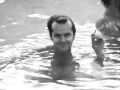
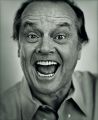
Photos of Jack Nicholson from various periods of his career, including film appearances, public events, and archival footage.
-

A portrait of Jack Nicholson from Wikiserial -

-

-
-

-
-

-



Conclusion
Jack Nicholson occupies a unique place in the history of world cinema. His work reflects the evolution of American cinema from the studio system to an auteur-driven and psychologically rich art form. He managed to maintain artistic integrity, resisting short-term trends, and for decades remained a defining figure in the acting profession.
Nicholson not only created a gallery of unforgettable screen characters but also had a significant influence on culture, aesthetics, and the very understanding of acting. His legacy continues to be studied, reinterpreted, and serves as a reference point for new generations of filmmakers.