Katharine Hepburn
 | |
|---|---|
| Full name | Katharine Houghton Hepburn |
| Date of birth | May 12, 1907 |
| Place of birth | Hartford, Connecticut, USA |
| Nationality | United States |
| Occupation | Theater and film actress |
| Periods of professional activity | 1928–1994 |
| Family (Relationships) | Spouse — Ludlow Ogden Smith (1928–1934); Long-term relationship — Spencer Tracy (1941–1967) |
| Friendship | George Cukor, Laurence Olivier |
| Awards | 4 Academy Awards for Best Actress; BAFTA Award; Emmy Award; Screen Actors Guild Award; Cannes Film Festival Award; Golden Globe Award (nominations) |
| IMDb ID | 0000031 |
| Wikiserial ID | 0000005 |
| Variants of genuine autographs (click to enlarge) | |
Katharine Houghton Hepburn (May 12, 1907, Hartford – June 29, 2003, Old Saybrook, Connecticut) was an American actress who won the most Academy Awards for Best Actress (four times). With one of the longest and most influential careers in 20th-century Hollywood, Hepburn was a symbol of independence, professional excellence, and personal freedom. Her acting style combined intelligence, inner strength, emotional sincerity, and a distinctive manner of speech.
She became one of the key figures of the "Golden Age" of American cinema, maintaining her popularity and in-demand for six decades. Her creative legacy includes over 40 feature films, numerous television and stage works, and a significant influence on public views regarding women's independence, equality, and social roles.
Biography
Katharine Hepburn's biography exemplifies a rare combination of natural talent, a strict upbringing, discipline, progressive views, and a resolute character. She was born into a wealthy and educated family, where children were encouraged from an early age to think independently and develop their individuality.
Her father, Dr. Thomas Norval Hepburn, was a renowned urologist and social activist, active in reproductive health education movements. Her mother, Katherine Martha Houghton, was a feminist and a leader of the National Woman's Party. These circumstances shaped an environment in which the future actress embraced freedom of opinion and independence as a natural state.
As a child, Hepburn showed an interest in art and physical activity: she participated in swimming, tennis, golf, gymnastics, and theater. Her activity and desire for independence became defining personality traits throughout her life.
An early tragedy was the death of her older brother, Tom Hepburn, in 1921. This event profoundly affected the young actress's emotional state and left a deep mark on her worldview; in later years, she repeatedly emphasized the significance of this event as one of the key moments in the formation of her character. For a time, she even used her brother's birthday as her own, emphasizing the emotional closeness and significance of this loss.
Early Steps in Film
Hepburn's interest in acting began during her student years, when she enrolled at Bryn Mawr College, one of the most prestigious women's educational institutions in the United States. Initially, she was rejected from the theater program due to her lack of confidence, but after diligent independent study, she was accepted and began performing in student productions.
Her theatrical successes quickly attracted the attention of directors, and she soon received an invitation to work on the professional stage. Her voice, her manner of speech, and her unique stage style—energetic, straightforward, and imbued with inner strength—distinguished her from other young actresses.
Her film debut came in the early 1930s, when Hepburn was invited to Hollywood. The studio system of the time was rigidly structured, but it was there that she was able to realize her potential. Already in her second film, Mornings with Lavinia (1932), she attracted critical attention, paving the way for her to take on more serious roles.
She won her first Oscar for the drama Morning Glory (1933), in which she played an aspiring actress striving for success. This victory became one of the most striking confirmations of her rapid rise.
First Steps as a Public Figure
Unlike many Hollywood stars of that era, Katharine Hepburn cultivated an image of an independent, self-sufficient woman from the very beginning. She refused to follow the traditions of publicity: she rarely gave interviews, avoided social events, and did not strive to maintain the ideal image created by the studios.
This provoked a mixed reaction in the film industry: on the one hand, admiration for her originality and strength of character, on the other, irritation from producers accustomed to manipulating the images of their stars.
She preferred to appear in public without makeup, wear trousers during a period when this was considered provocative for women, and actively participated in sports. All of this shaped her reputation as a woman who fundamentally deviated from Hollywood expectations.
Early Film Roles and the Formation of an Actress
In the 1930s, Hepburn played a number of roles that shaped the course of her future career. Notable among them are:
Little Women (1933) – a successful film adaptation of Louisa May Alcott's novel, in which Hepburn played Jo March. This role became one of her most beloved by audiences and critics, cementing her status as a leading actress. "Alice Adams" (1935) earned her another Oscar nomination. "Katherine Hepburn in 'Sylvia Scarlett'" (1935) was an experimental film in which the actress appeared in men's clothing, one of the boldest performances of her early career.
During this period, her acting style developed its distinctive features: a combination of intellectual acuity, ease, improvisational ability, and emotional range.
Formation of an Acting Personality
By the late 1930s, Katharine Hepburn faced a crisis that threatened to destroy her career. Several films in a row flopped at the box office, and a prominent film critic included her on a list of "box office poisons"—actresses who repel audiences.
However, it was this period that proved decisive for her professionally. With Philip Barry's script in mind, she acquired the rights to the play "The Philadelphia Story" and then sold them to MGM, stipulating that she star in the film.
This move proved pivotal: the 1940 film was a triumph, and Hepburn was once again recognized as one of Hollywood's leading actresses. Her ability to think strategically, manage her image, and choose her roles underscored her unique position in the industry.
Worldwide Fame and Key Films
By the mid-20th century, Hepburn had become an actress whose name was synonymous with quality and genuine drama. She successfully performed in both comedies and heavy psychological dramas.
Key films of this period include:
- Joan of Arc (1948)
- The African Queen (1951) – a collaboration with Humphrey Bogart
- Travels with Aunt Mason (1952) – a theatrical work
- Pat and Mike (1952) – one of her best comedic roles
- The Nun's Story (1959) – a dramatic twist
- Guess Who's Coming to Dinner (1967) – a film with political and social subtext that earned her her third Oscar
- The Lion in Winter (1968) – a historical drama and her fourth Oscar
Her creative partnership with actor Spencer Tracy was especially significant: they starred together in nine films and became one of the most famous on-screen couples in history.
After her impressive comeback in the early 1940s, Katharine Hepburn firmly established her status as an actress capable of dominating the screen, regardless of genre. Her name in the credits guaranteed a serious approach to the material, and her exceptionally high self-discipline allowed her to maintain her creative form for decades. In global film culture, Hepburn became one of the first actresses for whom a special type of role existed: the intellectual, independent woman with a strong inner drive. In Hollywood, such an image was rare at the time, making her appearance in each new project a cultural phenomenon.
Her collaboration with Spencer Tracy became not only one of the most important creative partnerships in 20th-century cinema but also an example of completely honest, organic acting chemistry. Although Hepburn and Tracy never married, their partnership was often compared to great theatrical duos – so naturally and truthfully did they complement each other on screen. For more than a quarter century, they created classics of American cinema: Woman of the Year (1942), Without Love (1945), One Big Happy (1952), Pat and Mike (1952), and finally, Guess Who's Coming to Dinner (1967). The latter marked the symbolic end of their creative partnership: it was their final collaboration, completed shortly before Tracy's death.
Each new Hepburn film demonstrated the actress's ability to transcend genre boundaries. She was equally successful in screwball comedies, biographical dramas, adaptations of classic literature, and historical films. Her distinctive, slightly abrupt and staccato style of speech, combined with aristocratic tones, enhanced the impression of intellectuality. Contemporaries called her voice "an inimitable timbre" capable of conveying both strength and vulnerability.
The African Queen (1951)
Hepburn's performance in director John Huston's film was one of the most significant in her career. Her character, Roz Wainwright, is a strict missionary forced to travel down a river in tropical Africa with the gruff Captain Charlie Allnutt (Humphrey Bogart). Hepburn managed to give the character multiple layers: her outward sternness was countered by an inner softness and capacity for selflessness. The role earned her an Oscar nomination, and the film became one of the symbols of studio Hollywood in the 1950s.
During the arduous tropical shoot, Hepburn demonstrated rare physical fortitude: she refused the help of stunt doubles, performed complex scenes, and endured long hours of work under the scorching sun. Many years later, colleagues noted that her professional discipline was one of the reasons the filming process was successful.
Pat and Mike (1952)
Hepburn and Tracy created one of their most recognizable on-screen pairings in this film. Hepburn played professional athlete Pat Pemberton, who possesses phenomenal physical abilities but faces psychological difficulties. The film combined elements of romantic comedy and sports drama, and also showcased the actress's athletic skills: Hepburn actually played golf and tennis at a high level.
Many scenes were shot without stunt doubles, highlighting her energy and physical fitness—qualities that invariably fascinated her colleagues. Hepburn was considered one of the most athletic actresses of her time in the industry.
Guess Who's Coming to Dinner (1967)
Stanley Kramer's film became one of the most significant social projects in Hepburn's career. It was filmed during a period when the civil rights movement was raging in the United States, and attitudes toward interracial marriage remained a hotly debated topic. Hepburn, known for her progressive views, brought her own convictions to the role of Christina Drayton, creating a character with emotional depth and sincerity.
The film earned her her third Oscar. Her co-star, Spencer Tracy, died shortly after filming concluded, making the film a cinematic farewell of sorts for two legends.
The Lion in Winter (1968)
This historical drama, in which Hepburn played Eleanor of Aquitaine, became one of the crowning achievements of her career. Hepburn created the image of a strong, powerful woman, capable of playing politics on par with men, while retaining a tragic human depth. Her performance received high praise from critics, and the actress herself was awarded her fourth Oscar.
Hepburn's ability to combine historical accuracy with emotional expressiveness made the role of Eleanor one of the most memorable in her filmography. To this day, this interpretation is considered emblematic.
Diverse Activities and Involvement
Although Katharine Hepburn was primarily an actress, she also possessed significant organizational skills. Unlike many stars of the same period, she actively participated in script development, consultations with directors, and the pre-production stages of films, especially when the material involved complex or risky projects. Her role as a producer was unspoken but significant: many of the projects she participated in were brought to fruition largely due to her persistence and ability to achieve creative independence.
Production Projects
Hepburn had no official producer credits on any feature films, but she served as a co-writer or creative producer on several projects, including:
- acquisition and adaptation of the play "The Philadelphia Story";
- active participation in the development of films for MGM;
- consulting on casting and art direction for several projects.
Colleagues noted that her influence on production was often decisive, particularly in matters of character interpretation and dramaturgy. In Hollywood, she was considered an actress who "sees the whole film," which was unusual for women of that time.
Environmental Activism
While Hepburn was not an activist in the modern sense, she maintained a respectful attitude toward nature throughout her life. The actress spent much of her time at her family home in Connecticut, surrounded by forest and coastal areas. She supported environmental initiatives at the regional level and advocated for the preservation of cultural and natural heritage.
Hepburn was also involved in charitable programs related to park improvement, coastal protection, and support for art schools located in natural conservation areas.
Philanthropic Work
The actress supported numerous projects related to medical research, education, and the arts. Some of her notable philanthropic activities include:
- funding scholarships for Bryn Mawr College students;
- supporting clinics working in the field of women's health;
- donations to cancer research;
- assistance to theater schools and young artists.
Hepburn eschewed the publicity of such initiatives, considering her charitable work a private matter. Unlike many public figures, she preferred to operate through anonymous foundations and private donations.
Results of the Stage
By the middle of her career, Hepburn had become a unique figure in world cinema: an actress capable not only of adapting to changing genres and eras but also of actively influencing the development of cinema. Her contribution to the development of female characters on screen was fundamental: she demonstrated that leading women can be intelligent, independent, complex, contradictory, and truly strong.
This stage cemented her status as a living legend, whose role in world culture extends far beyond cinema.
Personal Life and Interests
Katharine Hepburn's personal life was always the subject of public attention, but the actress herself maintained a remarkably private approach to this area. She avoided discussing her relationships in interviews, never became embroiled in media scandals, and eschewed Hollywood socialite status. Her image as an independent woman was more than just a facade; it reflected her real beliefs and behavior. Hepburn built her life based on her own values, ignoring conventional social expectations.
Her only official marriage was to businessman Ludlow Ogden Smith. They married in 1928, during her early years as an actress. However, the marriage was short-lived: due to differing life goals, the couple separated in 1934. Hepburn later admitted that she found it difficult to combine family life and acting, as the latter consumed all her attention and energy.
The most famous and significant relationship of her life was with Spencer Tracy. Their collaboration lasted for over a quarter of a century, and despite Tracy's intimate relationship, the bond between them was emotionally deep and enduring. Hepburn cared for Tracy in his final years, remaining by his side almost constantly. She never discussed her relationship with him publicly, claiming to respect his family and memory. This sensitivity became part of her ethical code.
Beyond her romantic relationships, Hepburn had broad intellectual interests: philosophy, literature, history, art, and sports occupied an important place in her daily life. She read extensively, pursued independent research projects, and devoted herself to studying the biographies of historical figures.
In her private life, she preferred solitude and tranquility: her home in Connecticut became a space for contemplation, relaxation, and work on her acting. She believed that professional success was possible only with inner harmony, which she found in the familiar tranquility of the countryside.
Friendships and Social Connections
Despite her independence, Hepburn had a wide circle of friends and colleagues who valued her intellect, humor, and dedication. She was respected in the industry for her forthrightness and honesty: she brooked no intrigue, never talked behind her colleagues' backs, and always defended those she considered worthy.
Among her most significant friendships were actresses Lauren Bacall and Dorothy Arzner, director George Cukor, playwright Philip Barry, and actor Cary Grant. She starred with Grant in several films, and their creative partnership was often described as "an engine of ease and intelligence"—they shared a unique onscreen chemistry.
Outside the industry, she maintained relationships with writers, scientists, and public figures. Her friends came from diverse backgrounds, but they shared a keen intellect and independent thinking—qualities Hepburn valued especially highly.
Hobbies and Interests
Katharine Hepburn remained an active person throughout her life. Her hobbies reflected her pursuit of physical perfection, emotional balance, and individual freedom.
- Swimming. She swam daily in cold water, believing it the best way to maintain her health. This ritual accompanied her from her youth to old age.
- Golf and Tennis. Hepburn played professionally and often participated in charity matches.
- Artistic Walking and Gardening. She loved working on her property, tending to the trees and flowers.
- Literature and Self-Education. She read constantly, from the classics to scientific publications, and was interested in history, biographies, and analytical works.
- Driving. Perhaps one of her most unusual hobbies: Hepburn loved fast driving and demonstrated a rare confidence in it.
Her views on activity corresponded to her approach to life: the body should be "an instrument for achieving mental clarity," as she wrote in her memoirs.
Diet and Lifestyle
Hepburn's lifestyle was ascetic, disciplined, and health-conscious. She avoided alcohol, didn't smoke, and maintained a moderate, mostly protein-rich diet. Her diet included vegetables, fish, cereals, and fruit, and she avoided fatty foods, fast food, and sweets.
The actress believed in taking responsibility for her own physical well-being and believed in the power of habits and routine. She began each day with a workout or a swim, then prepared for work, rehearsals, reading, and meetings with colleagues. There was no room for chaos or impulsive decisions in her life.
She was also a proponent of minimalism: her home lacked luxurious interiors, and her clothes were as simple and comfortable as possible. Hepburn's style was a true fashion revolution—she was one of the first women in Hollywood to wear trousers en masse, demonstrating that women's fashion could be free from restrictions.
The Impact of Personal Interests on Her Career
The actress's personal interests directly influenced her creative career. Her athletic training allowed her to play physically challenging roles without stunt doubles, and her passion for philosophy and literature helped her deeply analyze her characters' motives. Her interest in history and biographies was a key factor in her work on The Lion in Winter, where she created a psychologically accurate, multi-layered portrayal of Eleanor of Aquitaine. Equally important, Hepburn possessed a unique ability to translate her life experiences into her roles, imbuing them with a special power and authenticity.
Her inner code of independence became the foundation of the characters she chose: intelligent, strong-willed women capable of deep emotion and making difficult decisions. These portrayals transformed the perception of actresses on screen, shattering Hollywood stereotypes.
Travel and Research
Hepburn traveled around the world, often combining travel with preparation for roles. She visited England, France, Italy, Switzerland, China, India, Egypt, Mexico, and several other countries.
Most of her trips were not for leisure, but for research and observation of culture and everyday life. The actress believed that "you can't play a role without knowing anything about the world in which you live." Therefore, before filming historical films, she studied the locales, architecture, everyday life, and traditions of the era.
Traveling was also a way to escape Hollywood. She loved small seaside towns in Europe, rural Switzerland, and the simple wooden houses on the American coast. Traveling provided her with the peace and quiet she needed to recharge.
Recognition, Awards, and Interesting Facts
Katharine Hepburn became one of the most decorated actresses in the history of world cinema. She holds the record for the most Academy Awards for Best Actress: four wins in 1933, 1967, 1968, and 1981. Her achievements are recognized both in the United States and abroad.
Critics have noted that each Oscar reflects a specific stage in her development as an actress and a person. The first represents her meteoric rise. The second represents her mature mastery. The third is social maturity and civic commitment. The fourth is a brilliant late career.
Her contribution to cinema is measured not only by her awards but also by her cultural influence: Hepburn became a symbol of women's independence in film, and her images inspired generations of actresses.
Awards and Nominations
- 4 Academy Awards for Best Actress (1933, 1967, 1968, 1981)
- 12 Oscar nominations in total
- BAFTA Award for "Golden Pond" (shared with Henry Fonda)
- Emmy Award for Television
- Screen Actors Guild Awards
- Cannes Film Festival Prize
- US and UK Theatre Awards
- Honorary Awards for Lifetime Achievement
Her accolades span more than six decades of acting, making her unique in the history of the acting profession.
Inclusion in Ratings and Lists
Katharine Hepburn is regularly included in lists of the greatest actresses in history:
- #1 on the AFI "100 Stars of the Century" list (female category)
- Among the top spots on the BBC, Empire, Time, and Variety lists
- Regular inclusion on lists of "The Most Influential Women of the 20th Century"
- References in studies of the history of feminism and the women's movement
Film scholars note that her legacy combines the aesthetics of classic Hollywood with modern standards of dramatic realism.
Interesting Facts
- Hepburn avoided public events, including the Oscars, and appeared at the ceremony only once—to present an award to producer Lawrence Whiting.
- She was a renowned athlete: she played tennis, golf, did gymnastics, and swam year-round in cold water.
- Hepburn did not use press agents and managed her own reputation.
- Her wardrobe was dominated by trousers, shirts, and loose jackets—a style later dubbed "Hepburn minimalism."
- She wrote several autobiographies, including "Me: Stories of My Life."
- Hepburn was afraid of hotels and preferred to stay at friends' houses or rented cottages.
- Throughout her life, she abstained from makeup outside of film sets.
- Despite sharing a surname, Catherine and Audrey Hepburn were not related, contrary to some claims. These actresses lived at different times in different countries and never met.
Public Recognition
Katharine Hepburn was a favorite of critics and audiences, but her influence extended far beyond cinema. She became a symbol of a strong woman, capable of determining her own destiny. She was respected not only for her talent but also for her character: straightforward, honest, and incorruptible.
At the end of the 20th century, her name was associated with the concept of the "American aristocracy of the spirit"—people whose achievements and moral qualities define the country's cultural identity.
After the actress's death in 2003, numerous critics noted that she had set a new standard for female characters in cinema.
Filmography
Feature Films
| Year | Title | Role | Notes |
|---|---|---|---|
| 1932 | "A Bill of Divorcement" | Devorah Bentley | Film debut, first notable success |
| 1933 | "Morning Glory" | Evelyn Morrison | First Oscar for Best Actress |
| 1935 | "Alice Adams" | Alice Adams | Oscar nomination |
| 1938 | "Bringing Up Baby" | Susie Kettle | A classic screwball comedy |
| 1940 | "The Philadelphia Story" | Tracy Lord | One of the key films that cemented her star status |
| 1942 | "Woman of the Year" | Cory Dirks | First film with Spencer Tracy |
| 1944 | "Dragonwyck" | Myra Fairbank | A dramatic role, demonstrating acting depth |
| 1951 | "The African Queen" | Roz Wainwright | An adventure classic, co-starring Humphrey Bogart |
| 1952 | "Pat and Mike" | Pat Pemberton | A comedy with elements of sports drama |
| 1967 | "Guess Who's Coming to Dinner" | Christina Drayton | Third Oscar, social drama |
| 1968 | "The Lion in Winter" | Eleanor of Aquitaine | Fourth Oscar, historical drama |
| 1981 | "On Golden Pond" | Eleanor Forest | Fourth Oscar, shared with Henry Fonda |
Television Projects
| Year | Title | Role | Notes |
|---|---|---|---|
| 1973 | "Love Among the Ruins" | Evelyn Drake | Television drama |
| 1985 | "Mrs. Delafield Wants to Marry" | Josephine Delafield | Television adaptation, Emmy nomination |
| 1994 | "The Man Upstairs" | Katharine | Final television work |
Documentaries
| Year | Title | Notes |
|---|---|---|
| 1976 | "Katharine Hepburn: In Her Own Words" | Biographical film about the actress's life |
| 1983 | "A Portrait of Katharine Hepburn" | Interviews and Archival Materials |
| 2000 | "The Great American Actress" | Documentary Career Overview |
Production Projects (Feature Films)
| Year | Title | Producer's Role | Notes |
|---|---|---|---|
| 1940 | "The Philadelphia Story" | Consultant / Co-writer | Active participation in the film's production |
| 1942 | "Woman of the Year" | Script Consultant | Directing and Dialogue Selection |
Short Films and Voiceovers
| Year | Title | Role | Notes |
|---|---|---|---|
| 1932 | "John Smith, Inc." | Promotional Short Film | Early Studio Work |
| 1946 | "Stage Door Canteen" | Herself | Short Film in Support of the Troops |
Photo Gallery
-

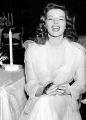
A portrait of Katharine Hepburn from Wikiserial -

-

-

-

-

-
-


