Steven Spielberg
 | |
|---|---|
| Full name | Steven Allan Spielberg |
| Date of birth | December 18, 1946 |
| Place of birth | Cincinnati, Ohio, USA |
| Nationality | United States of America |
| Occupation | Film director, producer, screenwriter |
| Professional career periods | 1961—present |
| Family (Relationships) | Married to Kate Capshaw; seven children |
| Friendship | George Lucas, John Williams, Martin Scorsese |
| Awards | 3 Academy Awards, AFI Life Achievement Award, Kennedy Center Honors, Presidential Medal of Freedom |
| IMDb ID | 0000229 |
| Wikiserial ID | 0000009 |
| Variants of genuine autographs | |
Steven Spielberg (full name Steven Allan Spielberg) is an American film director, producer, and screenwriter whose career has profoundly influenced the development of modern world cinema. Widely regarded as one of the greatest filmmakers in history, Spielberg helped redefine the concept of the Hollywood blockbuster while simultaneously demonstrating that commercially successful films could also achieve extraordinary artistic recognition.
Over more than six decades, Spielberg has directed films spanning science fiction, historical drama, adventure, war, family entertainment, biography, thriller, and fantasy. His work has consistently combined technical innovation with emotional storytelling, creating films that resonate across generations and cultures. He has been responsible for some of the highest-grossing motion pictures ever produced while also directing critically acclaimed works that received the film industry's highest honors.
Spielberg belongs to the generation commonly associated with the emergence of the "New Hollywood" movement during the late 1960s and 1970s. Alongside directors such as George Lucas, Martin Scorsese, Francis Ford Coppola, and Brian De Palma, he helped transform American cinema by introducing new narrative approaches, advanced visual techniques, and greater creative freedom for filmmakers.
Beyond directing, Spielberg has played a central role in the evolution of the entertainment industry through his work as a producer and studio executive. He co-founded DreamWorks SKG, established Amblin Entertainment, and has overseen the production of hundreds of films and television projects. His influence extends beyond individual productions, shaping technological innovation, visual effects, production standards, and the international film business.
One of Spielberg's defining strengths has always been his ability to combine spectacle with deeply personal storytelling. Whether depicting childhood wonder, historical tragedy, human resilience, or scientific imagination, his films consistently emphasize hope, compassion, moral responsibility, and the emotional complexity of ordinary individuals confronted with extraordinary circumstances.
Biography
Steven Allan Spielberg was born on December 18, 1946, in Cincinnati, Ohio. His birth came during the early years of the post-war American economic expansion, a period marked by rapid technological progress and profound social transformation. These historical circumstances would later influence many of the themes explored throughout his filmmaking career, particularly his fascination with science, innovation, family, and changing American identity.
Spielberg was born into a Jewish family. His father, Arnold Spielberg, worked as an electrical engineer and later became a pioneer in computer engineering, participating in the development of early computing technologies. His mother, Leah Adler, was a gifted pianist who later owned a kosher restaurant and remained actively involved in the arts throughout her life.
The contrast between his parents' personalities had a lasting impact on Spielberg's worldview. Arnold represented logic, scientific thinking, engineering precision, and technological curiosity, while Leah embodied artistic creativity, emotional openness, humor, and performance. Spielberg would later describe himself as a product of both worlds—someone equally fascinated by technology and emotional storytelling.
Throughout his childhood, the family relocated several times because of Arnold Spielberg's professional responsibilities. These moves took the family from Ohio to New Jersey and eventually to Arizona before finally settling in California. Constant relocation exposed young Steven to different communities but also created recurring feelings of displacement and social isolation.
Those experiences profoundly shaped his imagination. Rather than developing large circles of friends, Spielberg increasingly turned toward books, comic strips, science fiction magazines, and cinema. Movies gradually became not merely entertainment but an emotional refuge and a means of understanding the world around him.
Childhood and Family
Steven Spielberg's childhood has frequently been described as one of the defining influences on his artistic identity. Growing up during the 1950s, he experienced an America fascinated by technological progress, suburban expansion, and the Space Age. Television was becoming a dominant household medium, while cinema continued to evolve through widescreen formats and increasingly ambitious productions.
Despite these cultural developments, Spielberg often described himself as a shy and introverted child. He struggled with confidence and frequently found social interactions difficult. His Jewish heritage also made him the target of antisemitic bullying during parts of his youth, particularly after the family moved to predominantly non-Jewish communities.
These experiences left deep emotional impressions that later appeared throughout his films. Themes of loneliness, misunderstood outsiders, fractured families, and individuals searching for acceptance recur across much of Spielberg's filmography.
His relationship with his parents was deeply affectionate but also emotionally complicated. Arnold Spielberg encouraged intellectual curiosity and scientific experimentation. Steven often accompanied his father while observing electronic devices, engineering projects, and emerging computer technologies. These early experiences contributed to Spielberg's lifelong fascination with futuristic machines, robotics, space exploration, and technological optimism.
Leah Spielberg provided an equally significant artistic influence. A talented concert pianist with an energetic personality, she encouraged imagination, music, humor, and performance. Family members have often recalled that she filled the household with creativity and spontaneity, inspiring Steven to think visually and emotionally.
The eventual divorce of his parents during the 1960s became one of the defining emotional events of Spielberg's life. At the time, Steven believed his father had been primarily responsible for the separation, creating years of emotional distance between them. Decades later, he learned that the circumstances had been far more complex than he originally understood.
This revelation deeply influenced his later work. Films such as "E.T. the Extra-Terrestrial", "Catch Me If You Can", "Indiana Jones and the Last Crusade", "War of the Worlds", "Close Encounters of the Third Kind", and "The Fabelmans" all explore fractured families, absent fathers, reconciliation, and emotional healing.
Spielberg has repeatedly acknowledged that many of his films represent attempts to process personal childhood experiences through cinematic storytelling.
Education
Unlike many celebrated filmmakers, Spielberg did not follow a conventional educational path toward directing.
During his school years he showed little enthusiasm for traditional academic subjects unless they involved storytelling, history, or visual creativity. His grades were generally average, although teachers frequently observed his remarkable imagination and determination when working on creative assignments.
Rather than participating extensively in school athletics or social clubs, Spielberg devoted much of his free time to filmmaking experiments. He purchased cameras, studied editing techniques, organized neighborhood productions, and persuaded friends and family members to perform in homemade films.
After graduating from Saratoga High School in California, Spielberg applied to the University of Southern California's prestigious School of Cinematic Arts. Despite several attempts, he was rejected.
This rejection proved to be one of the most important turning points in his life. Instead of abandoning filmmaking, Spielberg pursued practical experience within the industry itself.
He later enrolled at California State College, Long Beach, where he studied English. However, his growing professional opportunities gradually took precedence over university life, and he left before completing his degree.
Many years later, after already becoming one of the world's most successful directors, Spielberg returned to complete his education. In 2002 he officially received his Bachelor of Arts degree from California State University, Long Beach, submitting "Schindler's List" as part of his academic requirements.
His educational journey has frequently been cited as evidence that practical experience, persistence, and creative vision can sometimes prove as valuable as formal film education.
First Amateur Films
Steven Spielberg began making films long before entering the professional industry. Using an 8mm camera acquired during childhood, he experimented continuously with homemade productions involving family members, neighbors, classmates, and friends.
His earliest films primarily depicted train crashes, military battles, western adventures, and science fiction scenarios. Even at this young age, Spielberg demonstrated unusual attention to editing, camera movement, and visual continuity.
Rather than simply recording events, he carefully staged scenes, planned camera angles, experimented with miniature models, and explored practical visual effects.
One of his earliest notable productions was "The Last Gun", a western short demonstrating surprisingly sophisticated visual composition for a teenage filmmaker.
His ambitions expanded considerably with "Escape to Nowhere", a forty-minute World War II adventure film featuring classmates as soldiers. Spielberg employed practical explosions, carefully planned action sequences, and ambitious location photography.
Perhaps his most remarkable early achievement was "Firelight" (1964), a feature-length science fiction film inspired by UFO reports and extraterrestrial mysteries.
Produced with a budget of approximately $500—mostly supplied by family members—"Firelight" premiered in a local theater and reportedly earned modest ticket revenue.
Although the film itself later became largely unavailable, historians consider it an important milestone because it introduced several ideas Spielberg would revisit throughout his professional career, including mysterious lights in the sky, encounters with extraterrestrial intelligence, emotional family relationships, and awe toward the unknown.
Many scholars identify "Firelight" as the conceptual ancestor of "Close Encounters of the Third Kind".
These amateur productions also allowed Spielberg to develop practical leadership skills. Directing actors, coordinating schedules, improvising special effects, and solving production problems became invaluable preparation for his future professional career.
Early Career
By the mid-1960s Spielberg had become determined to enter the professional film industry despite lacking formal connections within Hollywood.
One of the most famous stories associated with his early career concerns his repeated visits to Universal Studios. According to Spielberg's own recollections, he entered the studio lot during a public tour and gradually began returning independently, carrying a briefcase to appear like an employee.
Although the details have become somewhat legendary over time, it is clear that Spielberg spent considerable time observing professional film production from within the studio environment. He introduced himself to producers, technicians, editors, and directors whenever opportunities arose. Rather than waiting for formal invitations, Spielberg actively sought practical knowledge through observation and conversation.
During this period he continued directing independent short films while refining his understanding of camera movement, editing rhythm, dramatic pacing, and visual storytelling.
His growing technical confidence became evident in "Amblin" (1968), a twenty-five-minute short film depicting two young hitchhikers traveling across the California desert.
Unlike his earlier amateur productions, "Amblin" emphasized character development, visual storytelling, emotional atmosphere, and cinematic maturity. The film attracted considerable attention inside Universal Pictures.
Universal Studios
Universal executive Sidney Sheinberg recognized Spielberg's remarkable potential and arranged one of the most extraordinary opportunities ever granted to an aspiring filmmaker.
Spielberg became one of the youngest directors ever to receive a long-term directing contract with a major Hollywood studio. The agreement represented a historic breakthrough. Until then, Spielberg possessed almost no professional directing credits, yet Universal demonstrated unusual confidence in his creative abilities.
Working inside the studio system provided Spielberg with direct exposure to every stage of film production. He observed experienced cinematographers, production designers, editors, composers, assistant directors, and producers while continuing to develop his own directing methods.
Unlike many newcomers overwhelmed by the scale of major studio production, Spielberg adapted quickly. Crew members repeatedly praised his extraordinary preparation, visual imagination, and ability to communicate clearly with technical departments.
These early professional experiences also reinforced Spielberg's belief that filmmaking was fundamentally collaborative. Throughout his later career he consistently maintained long-term partnerships with trusted collaborators rather than constantly changing creative teams.
Television Work
Before becoming a major feature-film director, Spielberg built his reputation through television.
During the late 1960s and early 1970s he directed episodes for several successful American television series. These included "Night Gallery", "Marcus Welby, M.D.", "The Name of the Game", "Columbo", and "Owen Marshall, Counselor at Law".
Television production demanded extraordinary efficiency. Directors often had only a few days to prepare episodes before filming under tight schedules and limited budgets. Spielberg embraced these constraints as valuable training. He learned to make rapid creative decisions while maintaining narrative clarity and visual quality.
Many producers soon recognized that Spielberg consistently delivered episodes exceeding expectations despite difficult production conditions. His television work demonstrated increasing confidence with suspense, camera movement, visual storytelling, and actor direction.
The greatest achievement of this period was undoubtedly "Duel" (1971). Originally produced as an American television movie, "Duel" tells the story of an ordinary businessman relentlessly pursued across isolated highways by an unseen truck driver. The film contains remarkably little dialogue, relying instead on visual storytelling, editing rhythm, sound design, and escalating suspense. Following enthusiastic international reception, additional scenes were filmed to expand "Duel" for theatrical release outside the United States.
Today the film is widely regarded as one of the greatest television productions ever created and one of the finest suspense films of the twentieth century. Many critics identify "Duel" as the first unmistakably "Spielbergian" film, displaying techniques that would later characterize his greatest cinematic achievements.
Breakthrough with "The Sugarland Express"
Spielberg's first theatrical feature released by Universal Pictures was "The Sugarland Express" (1974). Based loosely on real events, the film follows a young married couple who take a police officer hostage while attempting to regain custody of their child.
Although the film achieved only modest commercial success, critics responded enthusiastically to Spielberg's confident direction. Reviewers praised his fluid camera movements, ability to balance humor with emotional tension, and remarkable control over large-scale action sequences.
The production demonstrated Spielberg's exceptional command of pacing. Car chases, intimate conversations, dramatic confrontations, and quiet emotional moments flowed together with unusual precision. Many industry observers concluded that Spielberg possessed rare technical maturity despite being only twenty-seven years old.
"The Sugarland Express" also established themes that would continue throughout Spielberg's career, including broken families, childhood, parental responsibility, institutional authority, and compassion toward flawed but fundamentally human characters.
Although often overshadowed by his later masterpieces, the film remains an important milestone in Spielberg's artistic evolution.
"Jaws" and the Birth of the Modern Blockbuster
By the mid-1970s Universal Pictures sought a director capable of adapting Peter Benchley's bestselling novel "Jaws" into a feature film. Spielberg accepted the challenge without realizing that the production would become one of the most difficult experiences of his career.
Filming took place largely on the open ocean around Martha's Vineyard, Massachusetts. Mechanical sharks malfunctioned repeatedly, weather conditions caused continuous delays, and production costs increased dramatically. Many executives feared the film would become an expensive failure.
Rather than surrendering to technical limitations, Spielberg transformed necessity into artistic advantage. Because the mechanical shark frequently failed to operate, Spielberg chose to show the creature only sparingly. Instead, he relied upon underwater camera perspectives, carefully constructed suspense, audience imagination, and John Williams' now legendary two-note musical motif. This creative decision fundamentally reshaped the film's psychological impact.
Released in 1975, "Jaws" became an unprecedented cultural phenomenon. It broke box office records worldwide, established the concept of the summer blockbuster, transformed studio marketing strategies, and demonstrated the commercial potential of wide nationwide releases supported by television advertising.
Critics praised Spielberg's extraordinary ability to balance suspense, adventure, character development, and humor. Roy Scheider, Richard Dreyfuss, and Robert Shaw delivered memorable performances, while Spielberg's direction elevated what might have been a conventional monster film into a sophisticated exploration of fear, leadership, community, and survival.
"Jaws" permanently changed Hollywood economics. Its success encouraged studios to invest heavily in event films capable of attracting massive international audiences. Modern blockbuster filmmaking can be directly traced to the commercial and cultural impact of Spielberg's achievement.
For Spielberg personally, "Jaws" transformed him from a promising young director into one of the most influential filmmakers in the world. At just twenty-eight years old, he had already demonstrated an extraordinary ability to combine technical innovation with emotionally compelling storytelling, laying the foundation for one of the greatest directing careers in cinema history.
"Close Encounters of the Third Kind"
Following the unprecedented success of "Jaws", Steven Spielberg found himself in a unique position within Hollywood. For the first time, he possessed both the commercial credibility and creative freedom necessary to pursue one of his lifelong passions: a serious science fiction film centered not on fear or invasion, but on curiosity, communication, and wonder.
Spielberg had been fascinated by reports of unidentified flying objects since childhood. During the 1950s and 1960s, stories of UFO sightings were common in American popular culture, and the young filmmaker avidly consumed books, magazine articles, documentaries, and eyewitness accounts. Rather than viewing extraterrestrial life as inherently threatening, Spielberg imagined intelligent visitors capable of inspiring awe and expanding humanity's understanding of the universe.
These ideas culminated in "Close Encounters of the Third Kind" (1977), a project Spielberg not only directed but also wrote. Unlike most contemporary science fiction films, the narrative focused primarily on ordinary individuals whose lives are transformed by mysterious encounters with unknown phenomena. Instead of emphasizing military conflict or large-scale destruction, Spielberg concentrated on emotional experience, personal obsession, and the universal desire to discover whether humanity is alone in the cosmos.
Richard Dreyfuss portrayed Roy Neary, an electrical worker whose chance encounter with a UFO gradually evolves into an all-consuming search for answers. François Truffaut, one of the leading figures of the French New Wave, appeared in a rare acting role as French scientist Claude Lacombe, while Melinda Dillon delivered an acclaimed performance as Jillian Guiler.
The production represented one of the most ambitious visual effects projects ever attempted during the 1970s. Under the supervision of Douglas Trumbull, the visual effects team developed innovative techniques involving motion-control photography, miniature models, sophisticated lighting systems, optical compositing, and practical effects that significantly advanced the state of cinematic visual technology.
John Williams composed one of his most recognizable scores for the film. Rather than relying solely on orchestral themes, Williams and Spielberg created the famous five-note musical sequence used as a means of communication between humans and extraterrestrials. The concept reflected Spielberg's belief that music represented a universal language capable of transcending cultural and biological differences.
Released in November 1977, "Close Encounters of the Third Kind" became both a commercial success and a major critical triumph. Critics praised Spielberg's ability to combine scientific imagination with emotional sincerity, while audiences embraced the film's optimistic portrayal of extraterrestrial contact.
The film received multiple Academy Award nominations and won the Oscar for Best Cinematography. It has since become one of the defining works of modern science fiction and remains widely regarded as one of Spielberg's most personal films.
Many scholars have interpreted "Close Encounters" as a reflection of Spielberg's own childhood experiences. Roy Neary's growing separation from his family, his irresistible attraction toward the unknown, and his search for meaning all parallel themes that repeatedly appear throughout Spielberg's filmography.
Collaboration with John Williams
One of the most enduring creative partnerships in film history developed between Steven Spielberg and composer John Williams.
Although Williams had already established himself as one of Hollywood's leading composers before "Jaws", his collaboration with Spielberg elevated both artists to new creative heights. Beginning in 1974, Williams composed the scores for nearly every Spielberg-directed feature film.
Their working relationship has often been described as unusually intuitive. Spielberg rarely provides detailed musical instructions, preferring instead to discuss emotional tone, character psychology, and narrative rhythm. Williams then translates these concepts into orchestral themes that become inseparable from the films themselves.
The simple two-note motif from "Jaws", the soaring orchestral themes of "E.T. the Extra-Terrestrial", the majestic fanfare of "Jurassic Park", the emotional restraint of "Schindler's List", and the adventurous energy of the "Indiana Jones" series demonstrate the remarkable versatility of their collaboration.
Spielberg has repeatedly stated that Williams functions not merely as a composer but as a storyteller whose music adds narrative dimensions impossible to achieve through dialogue or visuals alone.
Their partnership has received numerous Academy Awards, Grammy Awards, BAFTA Awards, and Golden Globe Awards, becoming one of the longest continuous director-composer collaborations in cinematic history.
The Birth of the Indiana Jones Franchise
During the mid-1970s Spielberg developed an increasingly close friendship with filmmaker George Lucas. Both directors belonged to the emerging generation of "New Hollywood" auteurs, yet they shared a deep affection for the adventure serials, westerns, and pulp stories that had entertained them during childhood.
Following the extraordinary success of "Star Wars", Lucas proposed an idea inspired by classic adventure heroes of the 1930s and 1940s. Rather than creating another science fiction epic, he envisioned a charismatic archaeologist whose adventures would combine historical mysteries, exotic locations, ancient artifacts, and spectacular action. Spielberg immediately embraced the concept.
Working together with screenwriter Lawrence Kasdan, Lucas and Spielberg developed "Raiders of the Lost Ark" (1981), introducing audiences to Professor Henry "Indiana" Jones Jr., portrayed by Harrison Ford.
Unlike many action heroes of the era, Indiana Jones possessed both intellectual curiosity and physical vulnerability. He could solve archaeological puzzles, lecture at universities, survive elaborate action sequences, and still emerge bruised, exhausted, and imperfect.
Spielberg's direction emphasized practical stunt work, rapid pacing, elaborate set pieces, and visual storytelling rooted in classical Hollywood adventure cinema. Rather than relying on excessive dialogue, many scenes communicated character through movement, framing, and carefully choreographed action.
Released in 1981, "Raiders of the Lost Ark" became one of the year's biggest successes. Critics praised its energy, humor, craftsmanship, and nostalgic celebration of cinematic adventure. The film received multiple Academy Awards and established one of the most successful franchises in film history.
Subsequent installments—"Indiana Jones and the Temple of Doom" (1984), "Indiana Jones and the Last Crusade" (1989), "Indiana Jones and the Kingdom of the Crystal Skull" (2008), and later "Indiana Jones and the Dial of Destiny" (2023), produced by Spielberg but directed by James Mangold—expanded the mythology while preserving the adventurous spirit of the original.
The franchise also significantly influenced action cinema. Countless later films adopted its combination of archaeology, historical mystery, practical stunts, humor, and globe-trotting adventure.
"E.T. the Extra-Terrestrial"
Following the ambitious scale of "Close Encounters", Spielberg sought to tell a far more intimate science fiction story.
Drawing inspiration from childhood loneliness and his parents' divorce, he conceived "E.T. the Extra-Terrestrial" (1982), focusing not on adults encountering aliens but on the emotional bond between a lonely child and a stranded extraterrestrial visitor. The screenplay, written by Melissa Mathison, centered on Elliott, portrayed by Henry Thomas, whose quiet suburban life changes after discovering a gentle alien abandoned on Earth.
Unlike most science fiction films of the period, "E.T." avoided depicting extraterrestrials as monsters or conquerors. Instead, Spielberg portrayed the alien as vulnerable, compassionate, curious, and deeply emotional.
The production required remarkable technical innovation. Carlo Rambaldi designed the expressive animatronic creature, while cinematographer Allen Daviau created warm, dreamlike visual compositions emphasizing childhood perspective and emotional intimacy.
John Williams composed one of the most celebrated orchestral scores in cinema history. Spielberg famously re-edited the film's climactic bicycle sequence to match Williams' completed composition rather than requiring the composer to adapt his music to the existing edit.
Upon its release, "E.T." became an international cultural phenomenon. The film surpassed "Star Wars" as the highest-grossing motion picture ever released at that time and remained among the world's most beloved family films.
Critics praised Spielberg's extraordinary ability to depict childhood with honesty and emotional authenticity. Rather than treating children as miniature adults, the film embraced their fears, hopes, imagination, and resilience.
"E.T." received nine Academy Award nominations and won four Oscars, including Best Original Score, Best Sound, Best Sound Effects Editing, and Best Visual Effects. Today the film is frequently cited as one of the greatest family films ever made and one of Spielberg's defining artistic achievements.
Amblin Entertainment
In 1981 Spielberg established Amblin Entertainment, named after his influential 1968 short film "Amblin". The company quickly became one of Hollywood's most successful independent production organizations.
Unlike traditional studios, Amblin emphasized filmmaker-driven projects, technical innovation, and creative flexibility. Spielberg sought to create an environment where directors and writers could pursue ambitious ideas without unnecessary bureaucratic interference.
Throughout the 1980s and 1990s Amblin produced numerous commercially successful and critically acclaimed films across multiple genres. Among its best-known productions were "Gremlins", "Back to the Future", "Who Framed Roger Rabbit", "The Goonies", "Batteries Not Included", "Cape Fear", "Twister", "Men in Black", and many others. Although Spielberg did not direct most of these films, his influence frequently extended to story development, production supervision, casting decisions, and overall creative guidance.
Amblin also became closely associated with family-oriented entertainment that respected young audiences without oversimplifying emotional complexity. The company remains active today and continues to produce feature films, television series, documentaries, and streaming projects.
Expansion as a Producer
During the 1980s Spielberg increasingly balanced directing with large-scale producing responsibilities. Unlike many producers who focused primarily on financial oversight, Spielberg remained deeply involved in creative development. He frequently participated in script revisions, casting discussions, production design decisions, editing consultations, and visual effects planning.
His reputation also enabled younger filmmakers to secure financing for ambitious projects that might otherwise have remained unproduced. Spielberg consistently supported emerging directors while maintaining unusually high production standards.
Many filmmakers later credited Spielberg's mentorship as instrumental in launching or strengthening their professional careers. His work as a producer significantly expanded his influence beyond the films he personally directed.
Collaboration with George Lucas
The friendship between Steven Spielberg and George Lucas represents one of the most significant creative partnerships in Hollywood history. Although their directing styles differ considerably, both filmmakers share admiration for classical adventure storytelling, technological innovation, and cinematic spectacle.
Throughout several decades they exchanged ideas, reviewed each other's projects, and collaborated extensively on the "Indiana Jones" franchise. Their partnership also extended to discussions regarding visual effects, digital filmmaking, sound technology, and theatrical exhibition.
Both directors played major roles in supporting Industrial Light & Magic, whose groundbreaking visual effects transformed modern cinema. Despite occasional creative disagreements, Spielberg and Lucas have consistently described each other as trusted friends and artistic collaborators. Their mutual respect helped shape an era during which blockbuster filmmaking achieved unprecedented technical sophistication.
Kathleen Kennedy and Long-Term Creative Partnerships
Another key figure in Spielberg's career has been producer Kathleen Kennedy. Beginning as Spielberg's assistant during the production of "Raiders of the Lost Ark", Kennedy quickly demonstrated exceptional organizational ability and creative judgment. She became one of Spielberg's closest producing collaborators, overseeing many of his most ambitious productions. Together they worked on numerous landmark films including "E.T.", "The Color Purple", "Empire of the Sun", "Jurassic Park", "Schindler's List", "War Horse", and many others.
Kennedy later became one of Hollywood's most influential producers and eventually assumed leadership of Lucasfilm following Disney's acquisition of the company. Their professional relationship exemplifies Spielberg's tendency to maintain long-term collaborations built upon mutual trust and shared creative values.
Directing Style
By the mid-1980s Steven Spielberg had fully developed one of the most recognizable directing styles in world cinema.
His visual storytelling emphasizes movement, emotional perspective, and spatial clarity. Rather than relying excessively on rapid editing, Spielberg often constructs scenes through carefully choreographed camera movement that guides audience attention naturally.
His films frequently begin by revealing audience reactions before showing the object of fascination itself. This technique creates anticipation while encouraging viewers to experience discovery alongside the characters.
Another hallmark of Spielberg's work is his extraordinary ability to direct children. Unlike many filmmakers who simplify young characters, Spielberg consistently portrays children as intelligent, emotionally complex individuals capable of courage, empathy, and independent thought.
Family relationships occupy a central position throughout his work. Absent fathers, fractured marriages, reconciliation, parenthood, and childhood vulnerability recur across genres ranging from science fiction to historical drama.
Spielberg also demonstrates exceptional control over pacing. Quiet character moments transition seamlessly into large-scale action without disrupting emotional continuity.
Technically, Spielberg has long embraced innovation while remaining committed to practical filmmaking techniques whenever possible. Throughout his career he has balanced cutting-edge visual effects with physical sets, practical stunts, detailed production design, and expressive cinematography.
Critics frequently describe Spielberg as one of cinema's greatest visual storytellers because he communicates complex emotional information through composition, movement, lighting, and performance rather than relying exclusively on dialogue.
By the end of the 1980s Spielberg had evolved far beyond the label of "blockbuster director." Through films such as "Close Encounters of the Third Kind", "Raiders of the Lost Ark", "E.T. the Extra-Terrestrial", "Empire of the Sun", and "The Color Purple", he had demonstrated remarkable versatility across genres while establishing himself as one of the defining artistic voices of contemporary cinema.
"The Color Purple" and the Expansion of Dramatic Cinema
Although Steven Spielberg had already become internationally associated with adventure films and science fiction during the late 1970s and early 1980s, he deliberately sought projects that would challenge public expectations and broaden his artistic range. Rather than remaining within the commercially successful genres that had established his reputation, Spielberg became increasingly interested in character-driven dramas exploring complex social and historical issues.
One of the most significant milestones in this transition was "The Color Purple" (1985), based on Alice Walker's Pulitzer Prize-winning novel. The film chronicles several decades in the life of Celie, an African American woman living in the rural American South during the first half of the twentieth century. Through themes of oppression, identity, resilience, family, and personal dignity, Spielberg explored emotional territory very different from the spectacle associated with his earlier productions.
The project represented an enormous creative responsibility. Spielberg worked closely with novelist Alice Walker, screenwriter Menno Meyjes, cinematographer Allen Daviau, composer Quincy Jones, and an ensemble cast that included Whoopi Goldberg, Danny Glover, Margaret Avery, Oprah Winfrey, and Adolph Caesar.
Critics particularly praised Spielberg's sensitivity toward the emotional lives of his characters, although some commentators questioned whether a white Jewish filmmaker could fully capture the historical experience depicted in the novel. Spielberg himself acknowledged these discussions and later described the film as an important educational and artistic experience.
"The Color Purple" received eleven Academy Award nominations, including Best Picture and Best Actress. Although it did not win an Oscar, the film significantly strengthened Spielberg's reputation as a director capable of handling emotionally demanding dramatic material with sincerity and visual elegance.
"Empire of the Sun"
Spielberg continued expanding his dramatic ambitions with "Empire of the Sun" (1987), adapted from J. G. Ballard's semi-autobiographical novel.
Set during the Japanese occupation of Shanghai in the Second World War, the film follows young British boy Jim Graham, portrayed by Christian Bale in his breakthrough performance. Separated from his parents after the outbreak of war, Jim struggles to survive while gradually losing the innocence of childhood.
Unlike conventional war films emphasizing military strategy or combat, "Empire of the Sun" examines conflict through the eyes of a child whose understanding of morality, identity, and civilization evolves under extraordinary circumstances.
Spielberg invested enormous effort into recreating wartime Shanghai. Thousands of extras participated in large-scale sequences, while extensive practical sets and carefully researched production design contributed to the film's remarkable authenticity.
John Williams composed one of his most lyrical scores, blending orchestral writing with traditional choral music and the Welsh hymn "Suo Gân", which became emotionally associated with Jim's longing for home.
Although the film achieved only moderate commercial success upon release, critical appreciation steadily increased over subsequent decades. Today "Empire of the Sun" is widely regarded as one of Spielberg's finest dramatic achievements and one of Christian Bale's earliest landmark performances.
Continuing Evolution During the Late 1980s
The closing years of the decade demonstrated Spielberg's remarkable versatility. "Always" (1989), inspired by the 1943 film "A Guy Named Joe", explored themes of sacrifice, mortality, and enduring love through a romantic fantasy involving aerial firefighting pilots.
During the same year Spielberg reunited with Harrison Ford and Sean Connery for "Indiana Jones and the Last Crusade". The film expanded the Indiana Jones mythology by introducing the relationship between Indiana and his father, Professor Henry Jones Sr., portrayed by Sean Connery.
Their dynamic became one of the franchise's defining strengths. Rather than focusing exclusively on adventure, Spielberg explored generational misunderstanding, emotional reconciliation, and the difficulty fathers and sons often experience when attempting to express affection. "The Last Crusade" became one of the highest-grossing films of 1989 and reinforced Spielberg's reputation for balancing spectacular entertainment with meaningful character development.
"Hook"
Released in 1991, "Hook" offered Spielberg an opportunity to revisit one of literature's most beloved fictional universes. The film imagines an adult Peter Pan, portrayed by Robin Williams, who has forgotten his childhood adventures and must return to Neverland to rescue his children from Captain Hook.
Although critical reactions were mixed upon release, audiences embraced the film's emotional themes concerning parenthood, imagination, responsibility, and rediscovering childhood wonder.
Spielberg later admitted that he remained dissatisfied with certain aspects of the production, believing that he had struggled to balance spectacle with emotional intimacy. Nevertheless, "Hook" has since developed a substantial international following and is now regarded by many viewers as an overlooked family classic.
"Jurassic Park"
Among Spielberg's greatest technological achievements stands "Jurassic Park" (1993), adapted from Michael Crichton's bestselling novel. The story revolves around an ambitious theme park populated by genetically recreated dinosaurs, where scientific achievement ultimately collides with ethical responsibility and human arrogance.
The project required visual effects far beyond anything previously attempted. Industrial Light & Magic, working alongside Stan Winston Studio, pioneered a revolutionary combination of computer-generated imagery and sophisticated animatronic creatures. Initially Spielberg intended to rely primarily on stop-motion animation, but rapid advances in digital technology convinced the production team to embrace CGI for many sequences.
The result permanently transformed visual effects filmmaking. Rather than overwhelming audiences with continuous spectacle, Spielberg carefully limited dinosaur appearances during the opening portion of the film, gradually building anticipation before revealing creatures through precisely staged moments of cinematic wonder. The first appearance of the Brachiosaurus remains one of the most celebrated moments in modern cinema, illustrating Spielberg's mastery of audience perspective and emotional revelation. John Williams' majestic orchestral score reinforced the film's sense of scientific discovery and childlike awe.
Released in June 1993, "Jurassic Park" shattered worldwide box office records and became the highest-grossing film ever produced at that time. Beyond its commercial success, the film fundamentally altered Hollywood production methods. Digital visual effects quickly became an essential component of blockbuster filmmaking, while Spielberg demonstrated that groundbreaking technology remained most effective when supporting compelling characters and suspenseful storytelling.
The film received three Academy Awards, all recognizing its technical achievements. Today "Jurassic Park" continues to influence filmmakers, visual effects artists, paleontologists, educators, and popular culture around the world.
"Schindler's List"
While "Jurassic Park" represented the height of technological entertainment, Spielberg simultaneously completed what many critics consider the greatest artistic achievement of his career. "Schindler's List" (1993), adapted from Thomas Keneally's novel "Schindler's Ark", tells the true story of German industrialist Oskar Schindler, who saved more than one thousand Jewish lives during the Holocaust.
For Spielberg, the project possessed profound personal significance. As the son of Jewish parents who had experienced antisemitism throughout his childhood, Spielberg approached the film with exceptional emotional responsibility. For many years he had postponed directing the project, believing himself insufficiently mature to portray the Holocaust with the seriousness it demanded.
Principal photography occurred primarily in Poland, including locations near the former Auschwitz concentration camp. Spielberg deliberately rejected elaborate visual spectacle in favor of restrained realism. The film was photographed almost entirely in black and white by cinematographer Janusz Kamiński, whose stark visual style evokes historical documentary photography while simultaneously emphasizing emotional immediacy.
Among the film's most powerful symbolic images is the girl wearing a red coat, one of the few moments presented in color. Spielberg later explained that the image represented both innocence and the world's moral failure to prevent unimaginable suffering.
Liam Neeson portrayed Oskar Schindler with remarkable complexity, presenting him neither as a conventional hero nor as a flawless moral figure. Ben Kingsley portrayed Itzhak Stern, while Ralph Fiennes delivered a chilling performance as Amon Göth.
Unlike many historical dramas, "Schindler's List" avoids simplistic moral divisions. Instead, Spielberg examines the gradual transformation of an opportunistic businessman into a man willing to sacrifice wealth, influence, and personal safety in order to preserve human life.
Released in December 1993, the film received overwhelming critical acclaim. It won seven Academy Awards, including Best Picture and Best Director, earning Spielberg his first Oscar for directing. The film also received BAFTA Awards, Golden Globe Awards, and widespread international recognition.
Perhaps more importantly, "Schindler's List" became a powerful educational resource, screened in schools, universities, museums, and historical institutions throughout the world. Spielberg has frequently stated that this remains the most important film of his career.
The Shoah Foundation
The emotional impact of "Schindler's List" inspired Spielberg to establish one of his most significant humanitarian initiatives. In 1994 he founded the Survivors of the Shoah Visual History Foundation, later incorporated into the USC Shoah Foundation.
The organization began collecting recorded testimonies from Holocaust survivors across numerous countries. Over subsequent decades the archive expanded dramatically, preserving tens of thousands of interviews documenting genocide, persecution, survival, and human resilience.
The Foundation eventually broadened its mission to include testimonies from survivors of other genocides and crimes against humanity. Today it remains one of the world's most important historical archives dedicated to preserving eyewitness testimony for future generations.
DreamWorks SKG
Following a decade of extraordinary commercial and artistic success, Spielberg sought greater independence from the traditional Hollywood studio system. In 1994 he joined Jeffrey Katzenberg and David Geffen to establish DreamWorks SKG. The initials "SKG" represented Spielberg, Katzenberg, and Geffen. Their ambition extended beyond creating another production company.
DreamWorks aimed to become a fully integrated entertainment studio capable of producing feature films, television programming, music, animation, interactive media, and eventually digital entertainment. Spielberg remained deeply involved in shaping the studio's creative philosophy.
DreamWorks produced numerous successful films spanning drama, comedy, historical cinema, animation, science fiction, and family entertainment. The studio's animation division later developed internationally recognized franchises including "Shrek", "Madagascar", "Kung Fu Panda", and "How to Train Your Dragon".
Although Spielberg concentrated primarily on directing and producing live-action films, his influence helped establish DreamWorks as one of Hollywood's most respected creative organizations.
"Saving Private Ryan"
Spielberg returned to World War II with "Saving Private Ryan" (1998), a film that fundamentally redefined cinematic depictions of combat. Inspired partly by the historical Niland brothers and broader wartime experiences, the film follows Captain John Miller, portrayed by Tom Hanks, who leads a small squad behind enemy lines to locate and evacuate Private James Ryan. The opening twenty-minute Omaha Beach sequence immediately became legendary.
Working with cinematographer Janusz Kamiński, Spielberg employed handheld cameras, desaturated colors, rapid shutter speeds, practical explosions, extensive prosthetic effects, and immersive sound design to create one of the most realistic battlefield sequences ever filmed. Military historians and veterans praised the extraordinary authenticity of the production.
Rather than glorifying combat, Spielberg emphasized confusion, fear, exhaustion, sacrifice, and moral ambiguity. Throughout the remainder of the film, action serves primarily as a vehicle for exploring leadership, duty, grief, friendship, and the human cost of war.
Tom Hanks delivered one of the defining performances of his career, while the ensemble cast included Tom Sizemore, Edward Burns, Barry Pepper, Adam Goldberg, Giovanni Ribisi, Jeremy Davies, Vin Diesel, Ted Danson, Bryan Cranston, and Matt Damon.
Released in 1998, "Saving Private Ryan" received universal critical acclaim. The film won five Academy Awards, including Spielberg's second Oscar for Best Director.
Its influence extended well beyond cinema. Numerous later war films, documentaries, television series, and video games adopted visual techniques pioneered by Spielberg, particularly the documentary-style realism of combat photography. The HBO miniseries "Band of Brothers", produced by Spielberg and Tom Hanks, directly evolved from the creative approach established in "Saving Private Ryan".
Spielberg at the End of the 1990s
By the close of the twentieth century Steven Spielberg occupied an unparalleled position within world cinema. Few directors had achieved comparable success across such diverse artistic fields.
He had directed some of history's greatest adventure films, revolutionized science fiction, transformed visual effects, redefined blockbuster filmmaking, created universally beloved family classics, produced internationally acclaimed historical dramas, founded major production companies, established one of the world's most important Holocaust educational foundations, and earned the industry's highest artistic honors.
Perhaps most remarkably, Spielberg had accomplished all of this before reaching the age of fifty-five. By the beginning of the new millennium, his career entered another phase characterized by increasing historical reflection, political complexity, and mature philosophical inquiry—developments that would define the next chapter of his extraordinary contribution to world cinema.
Mature Career (2001–Present)
The beginning of the twenty-first century marked another important transformation in Steven Spielberg's career. Having already established himself as one of the most successful directors in film history, Spielberg increasingly gravitated toward projects that explored moral ambiguity, political institutions, historical responsibility, artificial intelligence, and the relationship between technological progress and human nature.
Rather than repeating formulas that had previously brought enormous commercial success, Spielberg deliberately alternated between large-scale entertainment and intimate historical dramas. This period demonstrated perhaps the greatest artistic versatility of his career.
"A.I. Artificial Intelligence" (2001)
One of Spielberg's most personal projects was "A.I. Artificial Intelligence", originally developed by legendary director Stanley Kubrick.
Kubrick had acquired the rights to Brian Aldiss's short story "Supertoys Last All Summer Long" during the 1980s but ultimately concluded that available visual effects technology could not adequately realize his vision. Before his death in 1999, Kubrick encouraged Spielberg to direct the film, believing that Spielberg's emotional sensibility made him uniquely suited to the material.
Spielberg respected Kubrick's extensive pre-production work while adapting the screenplay himself. The film follows David, a highly advanced robotic child programmed to experience unconditional love toward his human mother. As society struggles to define the moral status of artificial beings, David embarks upon an emotional journey seeking acceptance and belonging.
Haley Joel Osment delivered one of the most acclaimed performances of his generation, portraying David with extraordinary emotional restraint. The film explored questions that remain highly relevant in the modern era, including artificial intelligence, consciousness, identity, memory, ethics, parental responsibility, and the boundaries separating humanity from technology.
Although critical reactions were initially divided because audiences expected a more conventional science fiction adventure, "A.I. Artificial Intelligence" has since undergone substantial critical reappraisal and is now frequently regarded as one of Spielberg's most philosophically ambitious works.
"Minority Report" (2002)
Spielberg returned to science fiction with "Minority Report", adapted from Philip K. Dick's influential short story.
Set in Washington, D.C., during the year 2054, the film depicts a society where crimes are prevented before they occur through the use of precognitive individuals capable of foreseeing violent acts.
Tom Cruise portrayed Chief John Anderton, the respected leader of the PreCrime division, whose own faith in the system collapses after he himself is accused of a future murder.
Rather than presenting technology as either inherently beneficial or inherently destructive, Spielberg examined the ethical consequences of predictive policing, surveillance, privacy, free will, and judicial responsibility.
The production involved extensive consultation with scientists, engineers, architects, industrial designers, and futurists in order to create one of cinema's most carefully researched visions of the future.
Many technologies imagined for the film—including gesture-controlled interfaces, personalized advertising, biometric identification, autonomous vehicles, and advanced data visualization—later emerged in real-world technological development.
"Minority Report" became both a commercial and critical success and remains one of the most respected science fiction films of the twenty-first century.
"Catch Me If You Can" (2002)
Released later the same year, "Catch Me If You Can" demonstrated Spielberg's remarkable ability to shift effortlessly between genres. Based on the life of Frank Abagnale Jr., the film follows a gifted young con artist who successfully impersonates airline pilots, physicians, lawyers, and other professionals while being pursued by FBI agent Carl Hanratty.
Leonardo DiCaprio portrayed Abagnale with charm, intelligence, and emotional vulnerability, while Tom Hanks provided an understated performance as the determined investigator gradually developing paternal affection for his elusive target. Rather than focusing exclusively on criminal deception, Spielberg emphasized themes of loneliness, fractured families, identity, forgiveness, and emotional maturity.
The film received widespread critical praise for its sophisticated screenplay, elegant visual style inspired by the 1960s, and outstanding performances. Today it is frequently regarded as one of Spielberg's most accessible and emotionally engaging character studies.
"Munich" (2005)
Among Spielberg's most politically complex films stands "Munich", inspired by the aftermath of the terrorist attack during the 1972 Summer Olympics.
Rather than presenting a straightforward revenge narrative, Spielberg examined the psychological consequences of violence through the experiences of an Israeli intelligence team assigned to eliminate individuals believed responsible for organizing the attack.
Eric Bana portrayed Avner Kaufman, whose growing moral uncertainty gradually becomes the emotional center of the film.
Spielberg deliberately avoided simplistic political conclusions. Instead, "Munich" explores cycles of retaliation, national security, ethical responsibility, personal trauma, and the human cost of prolonged conflict.
Although the film generated political debate in several countries, critics widely praised its maturity, suspense, and willingness to address morally difficult subjects without reducing them to ideological slogans.
Historical and Political Cinema
During the following decade Spielberg increasingly concentrated on historical dramas portraying moments that shaped democratic institutions and international relations.
"Lincoln" (2012)
"Lincoln" chronicles the final months of President Abraham Lincoln's life while focusing on his efforts to secure passage of the Thirteenth Amendment abolishing slavery.
Rather than depicting Lincoln primarily through battlefield scenes, Spielberg emphasized legislative negotiation, constitutional politics, compromise, and democratic governance.
Daniel Day-Lewis delivered a performance widely considered among the greatest in film history, earning the Academy Award for Best Actor.
Spielberg's restrained direction allowed dialogue, performance, and historical authenticity to dominate the narrative.
"Bridge of Spies" (2015)
Set during the Cold War, "Bridge of Spies" tells the true story of attorney James B. Donovan, who negotiates a prisoner exchange between the United States and the Soviet Union.
Tom Hanks portrayed Donovan as an ordinary citizen whose commitment to constitutional principles remains unwavering despite political pressure.
The film examines diplomacy, justice, integrity, and international law while avoiding simplistic portrayals of either side during the Cold War.
Critics praised Spielberg's classical storytelling style and careful historical reconstruction.
"The Post" (2017)
With "The Post", Spielberg explored freedom of the press and governmental accountability.
Set during the publication of the Pentagon Papers, the film follows newspaper publisher Katharine Graham and editor Ben Bradlee as they confront legal and political pressure while deciding whether to publish classified government documents.
Meryl Streep and Tom Hanks delivered widely acclaimed performances.
The film emphasized the essential role of independent journalism within democratic societies and demonstrated Spielberg's continuing interest in institutions facing moral tests.
Return to Science Fiction and Adventure
Even while directing historical dramas, Spielberg continued exploring imaginative storytelling.
"War of the Worlds" (2005)
Inspired by H. G. Wells' classic novel, Spielberg's adaptation focuses less on extraterrestrial invasion than on a divorced father's attempt to protect his children during societal collapse.
The film combines spectacular visual effects with intimate family drama, reflecting themes present throughout Spielberg's career.
"The Adventures of Tintin" (2011)
Spielberg fulfilled a lifelong ambition by adapting Hergé's famous comic series.
Using advanced performance-capture technology, the production combined realistic acting with stylized animation while preserving the adventurous spirit of the original stories.
"Ready Player One" (2018)
Based on Ernest Cline's novel, "Ready Player One" examines virtual reality, digital identity, nostalgia, and corporate control over emerging technologies.
The film demonstrates Spielberg's continued enthusiasm for technological innovation while simultaneously reflecting upon popular culture that helped shape his own generation.
"West Side Story" (2021)
Spielberg directed his first musical with a new adaptation of "West Side Story". Rather than attempting to replace the celebrated 1961 film, Spielberg sought to reinterpret the material with greater historical authenticity, expanded characterization, and more nuanced treatment of cultural identity.
The production received widespread critical acclaim, particularly for its cinematography, choreography, performances, and visual elegance.
"The Fabelmans" (2022)
Perhaps Spielberg's most autobiographical film is "The Fabelmans". Inspired directly by his own childhood, adolescence, family relationships, and early fascination with filmmaking, the film follows Sammy Fabelman as he gradually discovers cinema while coping with his parents' increasingly fragile marriage.
Although the narrative fictionalizes names and certain events, many of its emotional experiences closely parallel Spielberg's personal history. The film explores creativity not merely as artistic expression but as a means of understanding grief, family conflict, memory, forgiveness, and identity.
Critics described "The Fabelmans" as one of Spielberg's most intimate works and an extraordinary reflection upon the emotional origins of his lifelong artistic vision.
Production Career
Alongside directing, Spielberg remains one of the most influential producers in entertainment history. Through Amblin Entertainment and later DreamWorks, he has supervised or produced hundreds of feature films, television productions, documentaries, and animated projects.
His producing credits include internationally successful franchises such as "Back to the Future", "Gremlins", "Men in Black", "Transformers", "Jurassic World", and numerous award-winning dramatic productions.
Spielberg has consistently supported emerging filmmakers while encouraging technological innovation and high production standards.
Television Projects
Spielberg has also contributed significantly to television. His executive production work includes "Amazing Stories", "Band of Brothers", "Taken", "Into the West", "The Pacific", "Falling Skies", "Tiny Toon Adventures", "Animaniacs", and numerous documentary projects.
Particularly influential was "Band of Brothers" (2001), created with Tom Hanks, which remains one of television's highest-regarded historical miniseries.
Personal Life
Steven Spielberg married actress Amy Irving in 1985. The marriage ended in divorce in 1989.
In 1991 he married actress Kate Capshaw, whom he met during the production of "Indiana Jones and the Temple of Doom". Together they have a large blended family consisting of seven children, including biological and adopted children.
Spielberg has consistently attempted to protect his family from excessive public attention while maintaining one of Hollywood's most stable long-term marriages. Family relationships remain central both to his private life and to the emotional themes explored throughout his films.
Philanthropy
Spielberg has donated hundreds of millions of dollars to educational, humanitarian, cultural, and medical initiatives.
Beyond establishing the USC Shoah Foundation, he has supported organizations promoting Holocaust education, children's welfare, cancer research, veterans' assistance, arts education, and equal opportunity.
His charitable activities frequently receive little publicity because Spielberg generally prefers long-term institutional support over public campaigns.
Directing Style and Legacy
Steven Spielberg's influence on world cinema is difficult to overstate. His directing style combines technical precision with emotional accessibility. He consistently emphasizes visual storytelling, expressive camera movement, carefully choreographed blocking, memorable musical collaboration with John Williams, and extraordinary attention to character perspective.
Many techniques now considered standard in blockbuster filmmaking—including dynamic tracking shots, suspense through delayed revelation, emotionally motivated visual effects, and audience-identification framing—owe much to Spielberg's innovations.
At the same time, his dramatic films demonstrate remarkable restraint, allowing historical events and human performances to carry emotional weight without excessive stylistic distraction.
Numerous contemporary directors—including J. J. Abrams, Peter Jackson, Denis Villeneuve, Gareth Edwards, Colin Trevorrow, Jon Favreau, and many others—have acknowledged Spielberg's influence upon their own filmmaking.
Awards and Recognition
Steven Spielberg has received virtually every major honor available within the international film industry.
Among his most significant distinctions are:
- Three Academy Awards, including two for Best Director.
- Multiple BAFTA Awards.
- Numerous Golden Globe Awards.
- Directors Guild of America Lifetime Achievement Award.
- AFI Life Achievement Award.
- Kennedy Center Honors.
- Presidential Medal of Freedom.
- Honorary doctorates from several universities.
- Countless international lifetime achievement awards recognizing his contribution to cinema.
Several of his films have been selected for preservation by the United States National Film Registry because of their cultural, historical, and aesthetic significance.
Interesting Facts
- Spielberg was rejected multiple times by the University of Southern California's prestigious film school before becoming one of its most celebrated alumni.
- He completed his university degree decades after establishing his international career.
- He has collaborated with composer John Williams on nearly all of his feature films.
- Janusz Kamiński has served as Spielberg's principal cinematographer since "Schindler's List".
- Spielberg frequently storyboards sequences mentally rather than relying exclusively on detailed drawings.
- He has repeatedly stated that curiosity is the driving force behind his creative process.
- His films have collectively earned more than any other director's body of work at the worldwide box office.
Selected Filmography
| Year | Film | Role |
|---|---|---|
| 1971 | Duel | Director |
| 1974 | The Sugarland Express | Director |
| 1975 | Jaws | Director |
| 1977 | Close Encounters of the Third Kind | Director / Writer |
| 1981 | Raiders of the Lost Ark | Director |
| 1982 | E.T. the Extra-Terrestrial | Director |
| 1984 | Indiana Jones and the Temple of Doom | Director |
| 1985 | The Color Purple | Director |
| 1987 | Empire of the Sun | Director |
| 1989 | Indiana Jones and the Last Crusade | Director |
| 1991 | Hook | Director |
| 1993 | Jurassic Park | Director |
| 1993 | Schindler's List | Director |
| 1997 | The Lost World: Jurassic Park | Director |
| 1998 | Saving Private Ryan | Director |
| 2001 | A.I. Artificial Intelligence | Director / Writer |
| 2002 | Minority Report | Director |
| 2002 | Catch Me If You Can | Director |
| 2005 | War of the Worlds | Director |
| 2005 | Munich | Director |
| 2008 | Indiana Jones and the Kingdom of the Crystal Skull | Director |
| 2011 | The Adventures of Tintin | Director |
| 2012 | Lincoln | Director |
| 2015 | Bridge of Spies | Director |
| 2016 | The BFG | Director |
| 2017 | The Post | Director |
| 2018 | Ready Player One | Director |
| 2021 | West Side Story | Director |
| 2022 | The Fabelmans | Director / Writer |
Photo Gallery
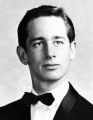
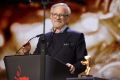
Photos of Steven Spielberg from different periods of his career, including directing major productions, public appearances, award ceremonies, behind-the-scenes photography, and archival images.
-

A portrait of Steven Spielberg from Wikiserial -

-

-

-
-
-

-


Conclusion
Steven Spielberg occupies a unique position in the history of world cinema. Few filmmakers have succeeded in transforming both the artistic language and commercial structure of the film industry while maintaining such remarkable consistency over more than six decades.
His work spans virtually every major genre and demonstrates an exceptional ability to unite technical innovation with emotional storytelling. From redefining the modern blockbuster through "Jaws" and "Jurassic Park" to confronting humanity's darkest historical chapters in "Schindler's List" and "Saving Private Ryan", Spielberg has continually expanded the possibilities of cinematic expression.
Beyond his achievements as a director, Spielberg's influence as a producer, studio founder, mentor, philanthropist, and advocate for historical preservation has shaped multiple generations of filmmakers and audiences alike. His films have inspired technological breakthroughs, advanced visual storytelling, preserved historical memory, and introduced millions of viewers to narratives that continue to resonate across cultures.
As one of the defining creative voices of modern cinema, Steven Spielberg's legacy extends far beyond box office records and awards. His career represents an enduring commitment to imagination, compassion, historical responsibility, and the belief that cinema possesses the power not only to entertain but also to educate, unite, and profoundly influence society.